JY Servicing dalam proses memperkenalkan produk terbarunya di pasaran.
Produk terkini adalah:
Muffin cake: RM0.15/sebiji (1 bekas + reben + nama = RM1.00)
Bahulu ikan : RM0.50/sebiji
**Door Gift untuk majlis kenduri kahwin, bertunang, cukur jambul, makan malam dan lain-lain.
Bekas dan design serta harga boleh dirunding mengikut permintaan.
Sila hubungi Pn Yusnita Hamdan untuk tempahan dan keterangan lanjut di 012-2533811.
***Gambar akan di upload kemudian.

Sunday, January 2, 2011

Friday, November 26, 2010
COOKIES & LAYER CAKES
 |
| Almond London |
 |
| Tart Nenas |
 |
| Biskut Oat Choc |
 |
| Choc Rose |
 |
| Kek Lapis Horlick |
 |
| Hijau-Kek Lapis Asam Manis |
Kepada sesiapa yang berminat untuk membeli atau menjadi dealer ketika musim perayaan, bolehlah berhubung terus dengan Balkis di talian 017-6586746 atau hubungi dealer terdekat kami.
For those who are interested to buy or to become a dealer, don't hesitate to call Balkis at 017-6586746 or please contact our nearest dealer.
Orchid..
 |
| purple.. |
 |
| purple pink |
 |
| white.. |
 |
| purple n white. |
 |
| red + purple +choc.. |
 |
| purple inside white |
 |
| dark red |
 |
| orange |
 |
| what color it is???? |
 |
| Yusnita's Garden |
***This photos are taken from my cousin house. Her orchid garden.
Thursday, November 25, 2010


Balkis's chocolate rose collection...
 |
| choc rose (love box): RM9.90 |
 |
| choc rose (oval box): RM8.90 |
 |
| choc rose (cube box): RM7.90 |
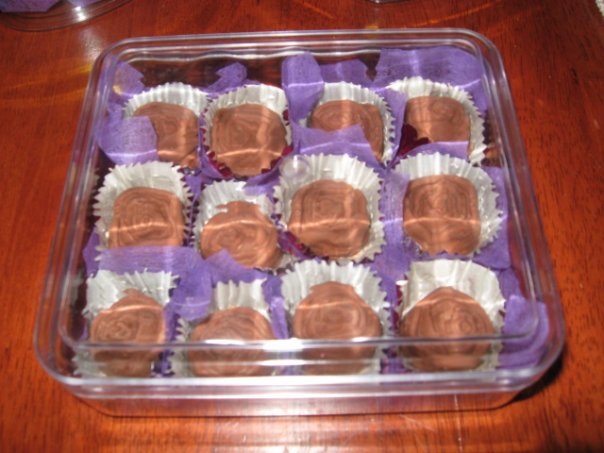 |
| choc rose (square box): RM8.90 |
 | |
|
Please contact our dealer:
Selayang/Kuala Lumpur
Zawani (Wak/Atok) : 017-3764765
Shah Alam/Klang/Terengganu
Yusnita: 012-2533911
Kuala Selangor/Sg Besar
Naim (Wak Dob):017-6148014
Batang Kali
Zawiyah/Awin :012-6829551
CHOCOLATE
WHAT IS CHOCOLATE ACTUALLY????
Chocolate (pronounced /ˈtʃɒklɨt/ ( listen) or /ˈtʃɒkəlɨt/) comprises a number of raw and processed foods produced from the seed of the tropical Theobroma cacao tree. Cacao has been cultivated for at least three millennia in Mexico, Central and South America, with its earliest documented use around 1100 BC. The majority of the Mesoamerican people made chocolate beverages, including the Aztecs, who made it into a beverage known as xocolātl (/ʃo.ko.laːtɬ/), a Nahuatl word meaning "bitter water". The seeds of the cacao tree have an intense bitter taste, and must be fermented to develop the flavor.
 |
| Picture from Balkis's collection |
After fermentation, the beans are dried, then cleaned, and then roasted, and the shell is removed to produce cacao nibs. The nibs are then ground to cocoa mass, pure chocolate in rough form. Because this cocoa mass usually is liquefied then molded with or without other ingredients, it is called chocolate liquor. The liquor also may be processed into two components: cocoa solids and cocoa butter. Unsweetened baking chocolate (bitter chocolate) contains primarily cocoa solids and cocoa butter in varying proportions. Much of the chocolate consumed today is in the form of sweet chocolate, combining cocoa solids, cocoa butter or other fat, and sugar. Milk chocolate is sweet chocolate that additionally contains milk powder or condensed milk. White chocolate contains cocoa butter, sugar, and milk but no cocoa solids.
Cocoa solids contain alkaloids such as theobromine and phenethylamine, which have physiological effects on the body. It has been linked to serotonin levels in the brain. Some research found that chocolate, eaten in moderation, can lower blood pressure.[1] The presence of theobromine renders it toxic to some animals,[2] especially dogs and cats.
Chocolate has become one of the most popular food types and flavors in the world. Gifts of chocolate molded into different shapes have become traditional on certain holidays: chocolate bunnies and eggs are popular on Easter, chocolate coins on Hanukkah, Santa Claus and other holiday symbols on Christmas, and chocolate hearts or chocolate in heart-shaped boxes on Valentine's Day. Chocolate is also used in cold and hot beverages, to produce chocolate milk and hot chocolate.
Around three quarters of the world's cacao bean production takes place in West Africa.
(http://en.wikipedia.org/wiki/Chocolate)
Saturday, November 13, 2010


Subscribe to:
Posts (Atom)